-
 June 9, 2026
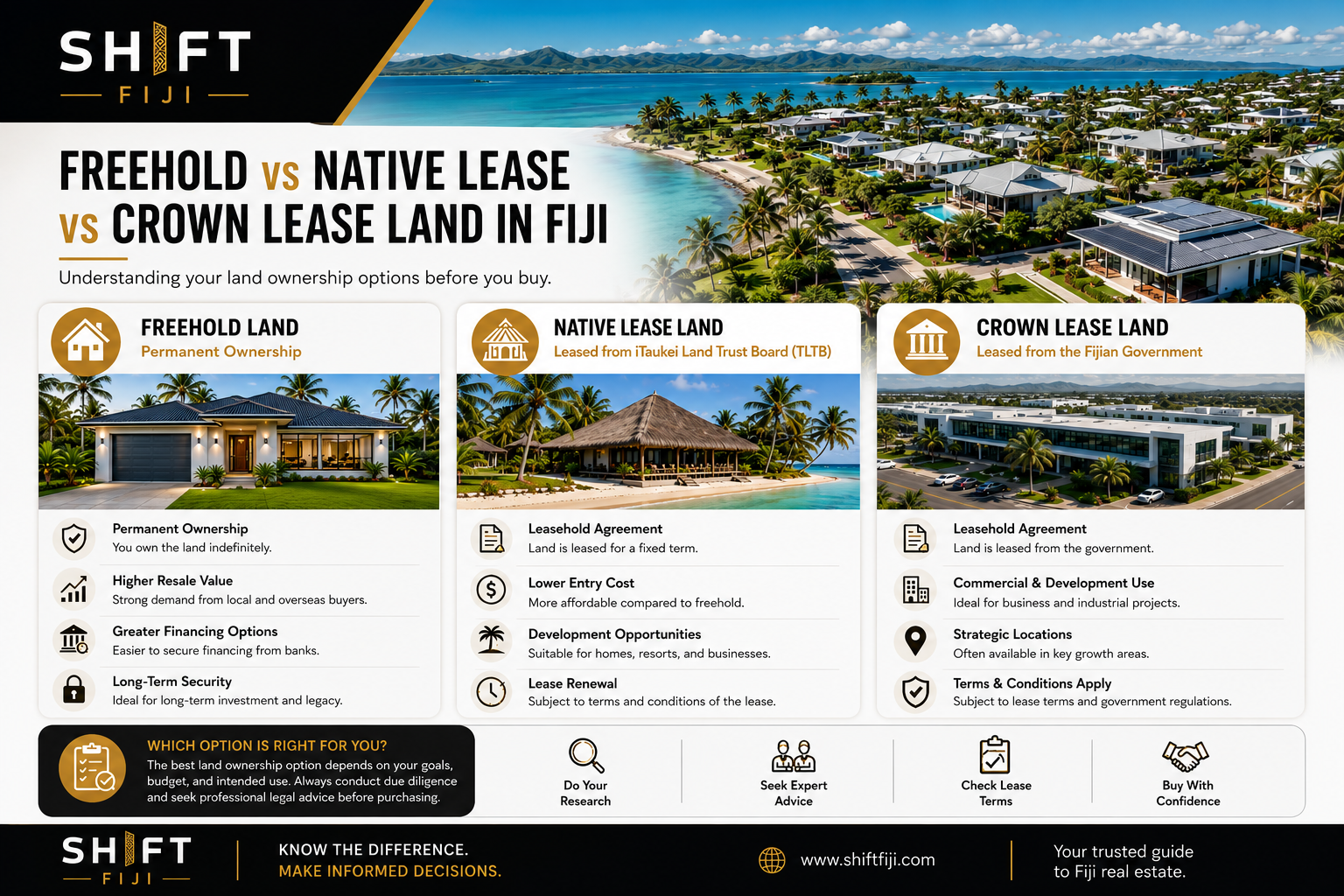
Freehold vs Native Lease vs Crown Lease Land in Fiji
One of the most important things to understand before buying property in Fiji is land tenure.
Unlike many countries where land is predominantly freehold, Fiji has three primary forms of land ownership:
Freehold Land
Native Lease Land
Crown Lease Land
Each ownership structure comes with different rights, responsibilities, opportunities, and risks.
Understanding the differences can help you make a more informed property investment decision.
Understanding Land Ownership in Fiji
Land ownership in Fiji is unique.
Approximately:
87% is Native Land
8% is Freehold Land
5% is State (Crown) Land
Because Freehold Land is limited, many buyers and investors will encounter leasehold opportunities during their property search.
The key is understanding what you're buying and what rights come with it.
What Is Freehold Land?
Freehold Land provides permanent ownership.
When you purchase Freehold Land, you own the property indefinitely and can generally sell, transfer, lease, or develop the land subject to applicable laws and planning regulations.
For many buyers, Freehold Land represents the most secure form of ownership available in Fiji.
Benefits of Freehold Land
Permanent ownership
No lease expiry concerns
Strong resale demand
Attractive to local and international buyers
Greater financing options
Long-term security
Considerations
Higher purchase prices
Limited availability
Strong competition in desirable locations
Because Freehold Land is relatively scarce, premium locations often command higher prices than comparable leasehold properties.
What Is Native Lease Land?
Native Land is owned by the indigenous landowners of Fiji and administered through the iTaukei Land Trust Board (TLTB).
This land cannot be sold.
Instead, it can be leased for residential, commercial, tourism, agricultural, and development purposes.
Many successful homes, resorts, commercial developments, and businesses in Fiji operate on Native Lease Land.
Benefits of Native Lease Land
Lower acquisition costs
Access to desirable locations
Tourism and development opportunities
Long-term lease options
Potentially lower entry barriers for investors
Important Considerations
Before purchasing Native Lease Land or leasehold property, buyers should review:
Remaining lease term
Lease renewal conditions
Rent review provisions
Development restrictions
Financing implications
The remaining lease period can have a significant impact on value and financing options.
What Is Crown Lease Land?
Crown Lease Land, also known as State Lease Land, is owned by the Fijian Government and leased to individuals or businesses.
These leases may be used for:
Residential purposes
Commercial purposes
Industrial developments
Tourism projects
Mixed-use developments
Like Native Lease Land, ownership is based on lease rights rather than permanent title ownership.
Benefits of Crown Lease Land
Access to strategic locations
Development opportunities
Potentially lower purchase costs
Commercial and investment potential
Important Considerations
Buyers should carefully assess:
Remaining lease duration
Renewal provisions
Land use conditions
Development requirements
Transfer conditions
As with all leasehold properties, proper due diligence is essential.
Freehold vs Native Lease vs Crown Lease
Freehold Land
Best suited for buyers seeking:
Permanent ownership
Long-term wealth creation
Maximum flexibility
Strong resale opportunities
Native Lease Land
Best suited for buyers seeking:
Lower acquisition costs
Tourism-related opportunities
Lifestyle properties
Development opportunities
Crown Lease Land
Best suited for buyers seeking:
Commercial opportunities
Development projects
Strategic locations
Specific business purposes
Which Option Is Best for Investors?
There is no single answer.
The best option depends on your goals, budget, risk tolerance, and intended use.
Freehold Land is often preferred by buyers seeking long-term ownership and maximum flexibility.
Native Lease Land can provide excellent value and access to premium locations that may not otherwise be available.
Crown Lease Land can present attractive commercial and development opportunities in strategic locations.
Many successful property investments in Fiji have been made under all three ownership structures.
Questions Every Buyer Should Ask
Before purchasing any property in Fiji, consider the following questions:
What type of land tenure applies?
How many years remain on the lease?
Are there any rent review provisions?
What are the renewal conditions?
Are there development restrictions?
Can financing be obtained?
Has proper due diligence been completed?
Understanding these factors early can help avoid costly mistakes later.
The Importance of Due Diligence
Regardless of the land tenure type, due diligence is essential.
Buyers should always work with qualified professionals including:
Licensed real estate agents
Property lawyers
Surveyors
Valuers
Proper due diligence helps identify risks, clarify ownership rights, and ensure there are no surprises after purchase.
Final Thoughts
There is no universally "best" land tenure in Fiji.
Each ownership structure offers advantages and considerations depending on your objectives.
The key is understanding the differences, conducting proper due diligence, and seeking professional advice before entering into any transaction.
Whether you're purchasing a family home, investment property, development site, or commercial asset, understanding Fiji's land tenure system is one of the most important steps in making a successful property investment.
Need Help Understanding Fiji Property Ownership?
Explore verified listings, connect with trusted professionals, and access expert property resources through SHIFT Fiji.



Post Comment