-
 June 9, 2026
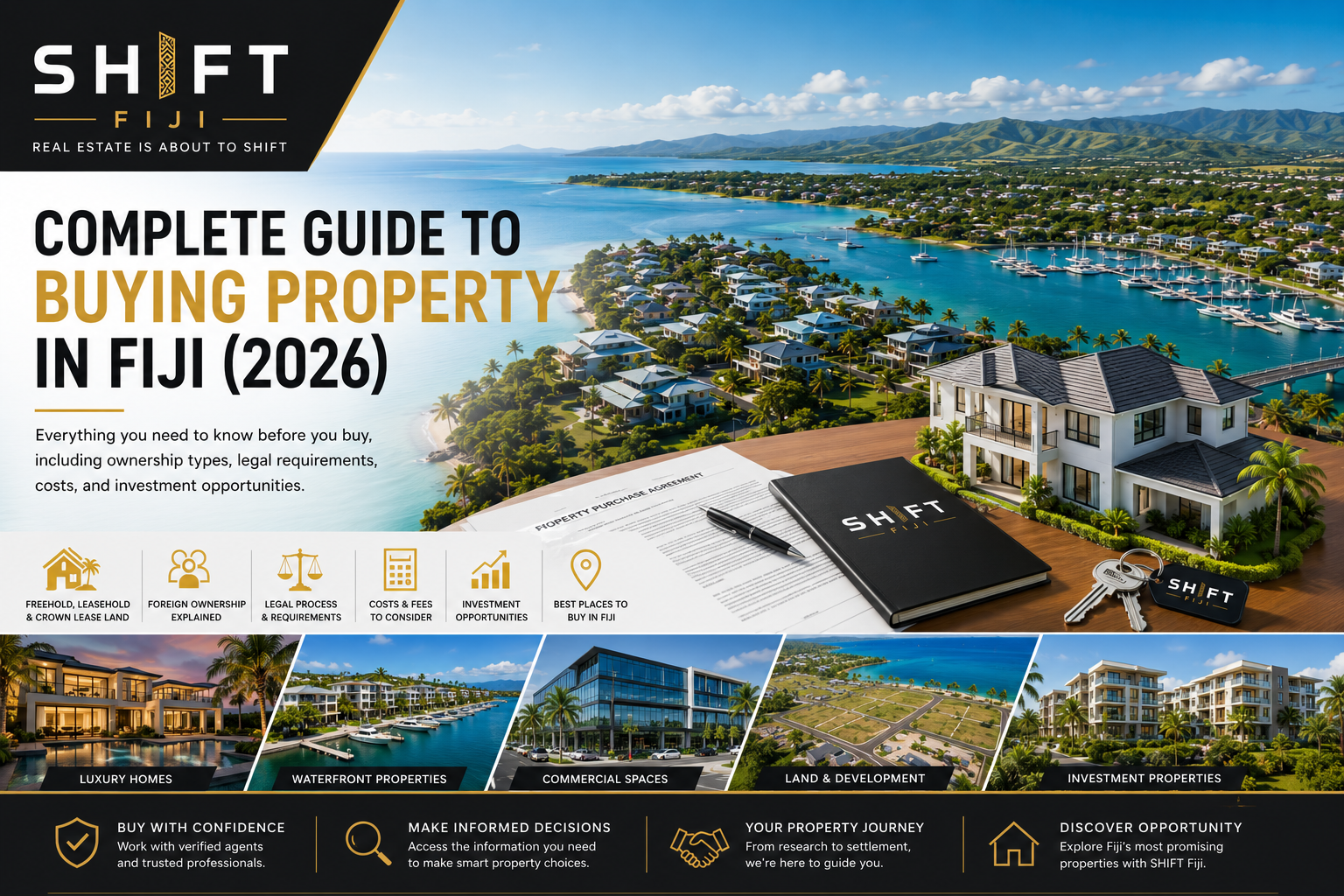
Complete Guide to Buying Property in Fiji (2026)
Fiji continues to attract buyers from around the world looking for lifestyle, investment, retirement, and development opportunities.
From beachfront villas and family homes to commercial buildings and development land, Fiji offers a diverse range of property options.
Whether you're a first-time buyer, investor, expatriate, or returning resident, understanding how the property market works is essential before making a purchase.
This guide covers everything you need to know before buying property in Fiji.
Why Buy Property in Fiji?
People invest in Fiji for many different reasons.
Some are looking for a permanent residence.
Others are seeking rental income, capital growth, or a holiday home in the South Pacific.
Key reasons buyers choose Fiji include:
Lifestyle and retirement opportunities
Holiday home ownership
Short-term rental investments
Commercial property opportunities
Development potential
Long-term capital growth
A stable and attractive tourism market
As Fiji continues to develop, demand for quality property remains strong in key locations throughout the country.
Understanding Land Ownership in Fiji
One of the most important things to understand before purchasing property is land tenure.
Unlike many countries, Fiji has three primary forms of land ownership:
Freehold Land
Native Lease Land
Crown Lease Land
Each has different rights, responsibilities, and considerations.
Freehold Land
Freehold land provides the highest level of ownership available in Fiji.
Owners hold permanent title to the land and can generally sell, lease, or develop the property, subject to applicable laws and planning regulations.
Benefits of freehold land include:
Permanent ownership
Strong resale demand
Attractive to local and overseas buyers
Greater financing options
Long-term security
Freehold land represents only a small percentage of Fiji's total land area, making it highly sought after.
Native Lease Land
Approximately 87% of Fiji's land is Native Land and is administered through the iTaukei Land Trust Board (TLTB).
This land cannot be sold but can be leased for residential, commercial, tourism, agricultural, and development purposes.
Benefits include:
Lower entry costs
Access to desirable locations
Development opportunities
Long-term lease arrangements
Before purchasing leasehold property, buyers should carefully review:
Remaining lease term
Renewal conditions
Rent review provisions
Financing implications
Crown Lease Land
Crown Lease Land is owned by the Fijian Government and made available through lease agreements.
These properties can offer attractive opportunities depending on location and intended use.
Key considerations include:
Lease duration
Renewal provisions
Land use restrictions
Development conditions
As with any leasehold property, due diligence is essential.
Can Foreigners Buy Property in Fiji?
Yes.
Foreign buyers can purchase property in Fiji, although regulations may apply depending on the property type and intended use.
Foreign investors commonly purchase:
Freehold residential property
Freehold land
Commercial property
Tourism developments
Investment properties
Certain rules may apply to undeveloped land and specific categories of property.
Because regulations can change, buyers should always seek independent legal advice before proceeding.
Best Places to Buy Property in Fiji
Different regions offer different opportunities depending on your goals.
Nadi
One of Fiji's fastest-growing property markets, Nadi benefits from strong tourism demand, residential development activity, short-term rental opportunities, and proximity to Fiji's international airport.
Naisoso Island
Naisoso Island is one of Fiji's premier waterfront communities, attracting buyers seeking luxury homes, waterfront developments, holiday rental opportunities, and long-term lifestyle investments.
Denarau Island
Denarau is a well-established tourism and lifestyle destination known for marina access, resort-style living, holiday homes, and strong appeal to international buyers.
Suva
As Fiji's capital city and largest commercial centre, Suva continues to attract demand from owner-occupiers, investors, and businesses seeking long-term growth opportunities.
Pacific Harbour
Known as Fiji's adventure capital, Pacific Harbour offers an attractive mix of waterfront living, retirement opportunities, lifestyle properties, and future development potential.
Coral Coast
The Coral Coast continues to attract buyers seeking beachfront land, holiday homes, tourism-related investments, and lifestyle-focused properties.
Costs to Consider When Buying Property
Many first-time buyers focus only on the purchase price.
However, additional costs should also be considered when budgeting for a property purchase.
These may include:
Legal fees
Due diligence costs
Survey fees
Valuation fees
Financing costs
Registration fees
Insurance
Ongoing maintenance expenses
Understanding these costs upfront can help avoid unexpected surprises.
The Property Buying Process
Step 1: Define Your Goals
Before viewing properties, determine your budget, preferred location, property type, and investment objectives.
Step 2: Research the Market
Compare property prices, rental demand, development activity, and infrastructure projects to better understand market opportunities.
Step 3: Work With Qualified Professionals
The right team can significantly reduce risk.
This may include:
Licensed real estate agents
Property lawyers
Surveyors
Valuers
Accountants
Step 4: Conduct Due Diligence
Never purchase property without proper due diligence.
Important checks include:
Title verification
Lease review
Boundary confirmation
Encumbrance searches
Planning restrictions
Easements
Step 5: Secure Financing
If financing is required, obtain approval as early as possible.
Financing options vary depending on residency status, property type, and lending institution.
Step 6: Sign Contracts
Once due diligence is complete, legal documentation can be prepared and signed.
Independent legal advice should always be obtained before committing to a purchase.
Step 7: Settlement and Transfer
Following settlement, ownership or lease rights are formally transferred and registered.
Your legal representative will guide you through the final stages of the transaction.
Common Mistakes Buyers Make
Many property purchases fail because buyers overlook critical details.
Common mistakes include:
Purchasing property without conducting proper due diligence
Focusing solely on purchase price rather than long-term value
Failing to understand land tenure and lease conditions
Overestimating rental income potential
Working with unverified or inexperienced professionals
Avoiding these mistakes can significantly reduce risk and improve investment outcomes.
Why Fiji Continues to Attract Investors
Fiji offers a unique combination of lifestyle appeal and investment potential.
Key drivers include:
Strong tourism industry
Growing international awareness
Limited premium waterfront land
Stable long-term demand
Attractive lifestyle opportunities
Expanding infrastructure investment
For many buyers, Fiji represents both a lifestyle decision and a long-term investment opportunity.
Final Thoughts
Buying property in Fiji can be both exciting and rewarding when approached correctly.
Whether you're purchasing a family home, investment property, commercial asset, or development site, success starts with understanding the market, conducting proper due diligence, and working with trusted professionals.
The more informed your decisions, the more likely you are to achieve your property goals.
Ready to Explore Property Opportunities in Fiji?
Browse verified property listings, connect with trusted professionals, and discover investment opportunities across Fiji with SHIFT Fiji.


Post Comment